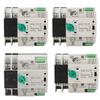
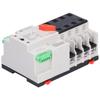
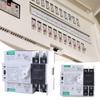
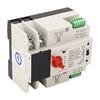
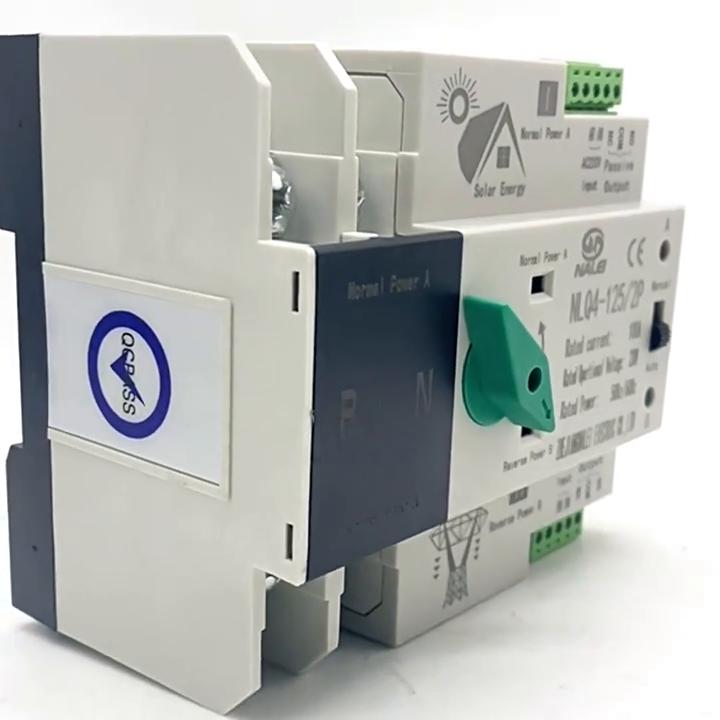
It can be operated automatically or manually, with millisecond switching without power outage. It has a compact structure, reliable transmission, convenient installation and maintenance, and a long service life. Widely used in various situations where continuous power outages are not allowed
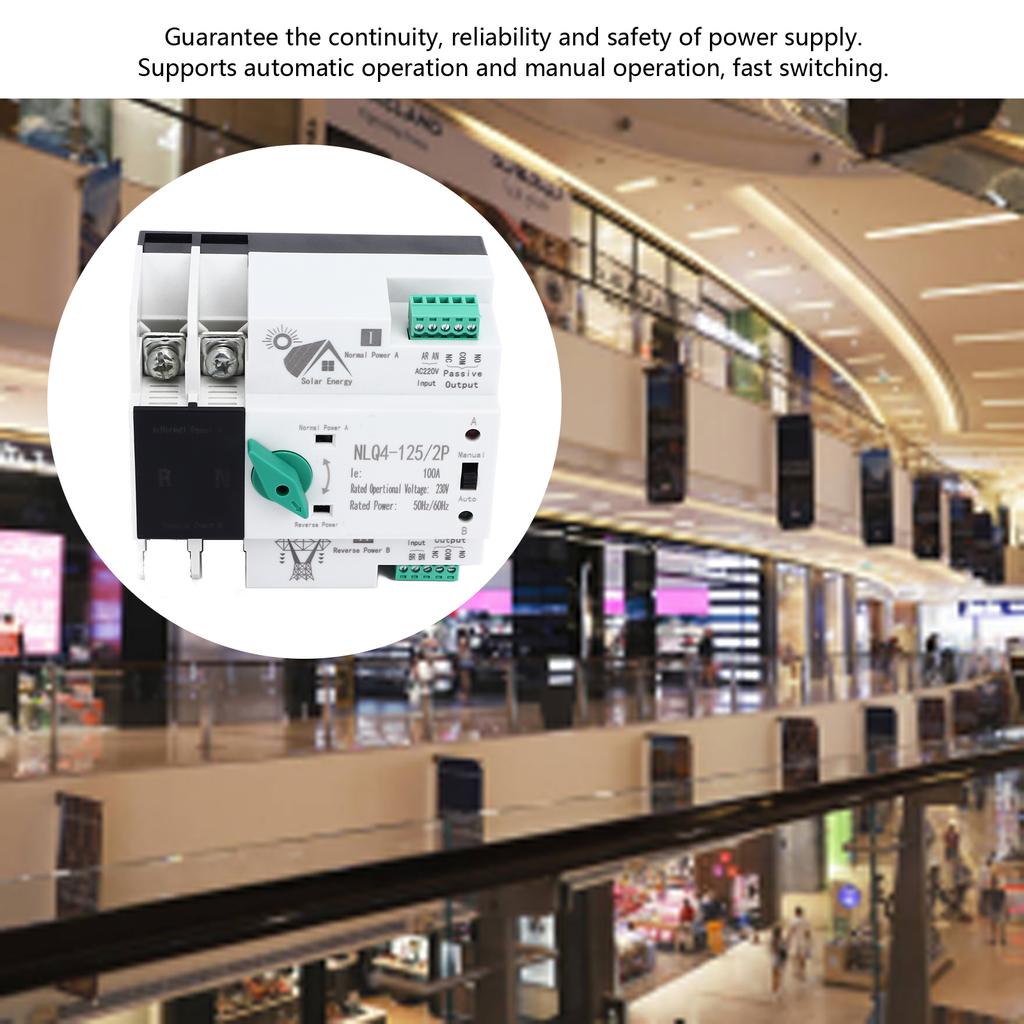
When there is an abnormality in the normal power supply, the backup power supply immediately operates, ensuring the continuity, reliability, and safety of the power supply.
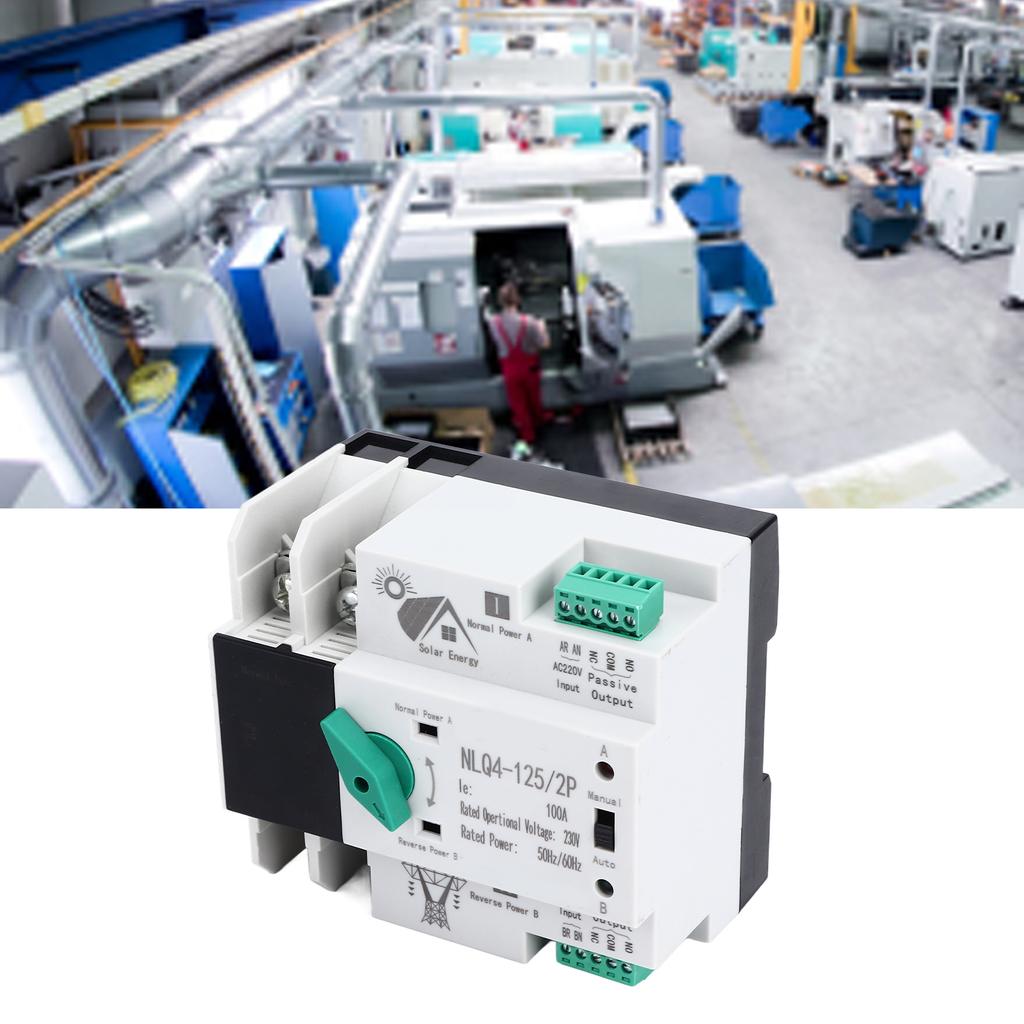
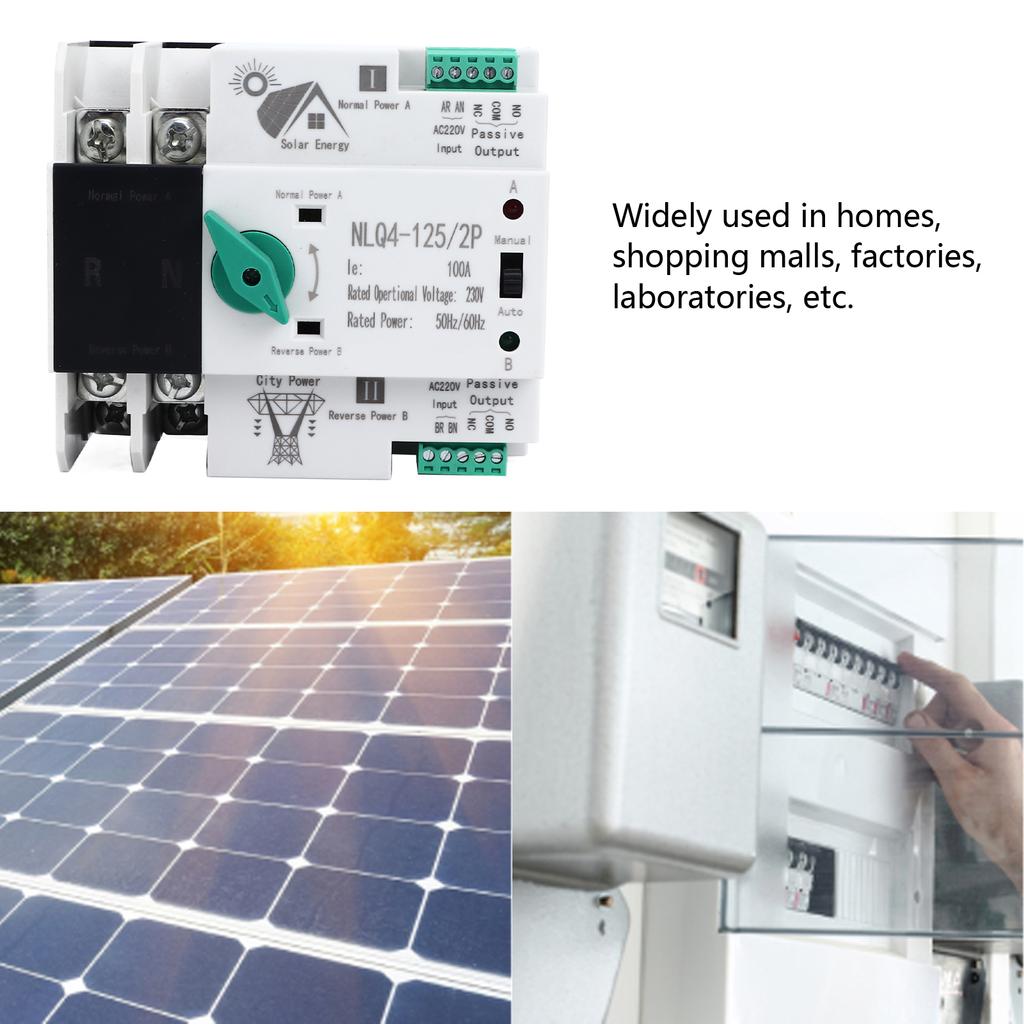
This automatic transfer switch is suitable for emergency power supply systems with AC rated 230V 100A at 50 or 60Hz
The transfer switch is made of high-quality flame-retardant plastic with good insulation, high temperature resistance, aging resistance, safety and reliability
Exquisite craftsmanship, isolation and anti-interference, self switching and self resetting, stable performance, reliable use, widely used in households, shopping malls, factories, laboratories, breeding farms and other occasions
Product parameters
Product Name: Dual Power Automatic Switching Switch
Product model: NLQ4-125/2P
Switch type: secondary distribution
Rated current: 100A
Rated voltage: 230V AC
Insulation voltage: 690V AC
Rated frequency: 50Hz/60Hz
Electrical level: PC level isolation type
Rated impulse withstand voltage: 8KV
Operating instructions
Before installation, please check the integrity of the ATS, use the operating handle to turn it on or off, check the flexibility of the transmission device, and detect the generation and disconnection conditions of normal and backup power loads at each stage
Packaging List
Dual power automatic switching switch * 1
matters needing attention
1. The maximum ambient temperature should not exceed 40 ℃, the minimum should not be lower than -5 ℃, and the average temperature within 24 hours should not exceed 35 ℃. 2. The altitude of the installation site should not exceed 2000m. 3. When the maximum temperature reaches 40 ℃, the relative humidity of the installation site should not exceed 50%; When the temperature is at the lowest temperature of -5 ℃ and the relative humidity is high, for example, at a temperature of 25 ℃, the relative humidity is 90%. Due to temperature changes, special measures should be taken to deal with occasional condensation on the surface of the product




 No-delivery refund